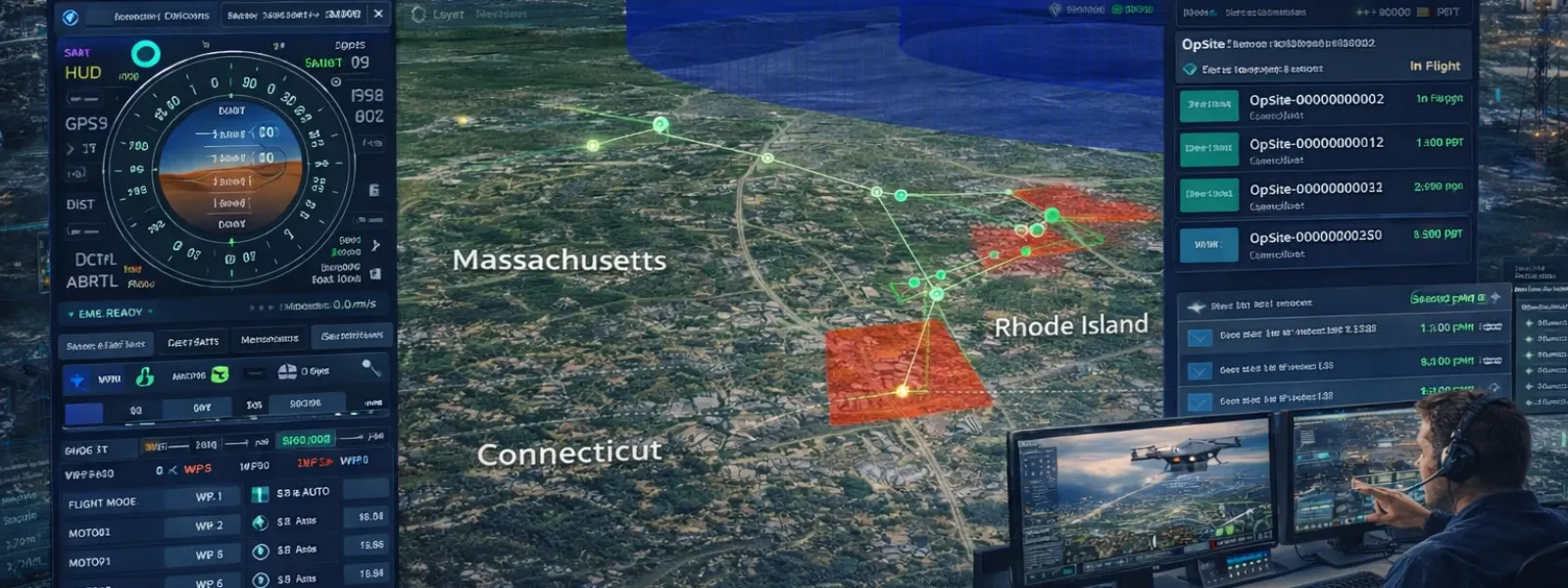
Many operators. Many aircraft. One shared sky.
As delivery, inspection, security and public-safety flights multiply over the same neighborhoods, coordination stops being a pre-flight formality and becomes the safety problem. We're building for that moment.
The gap
Strategic coordination under ASTM F3548 keeps flight plans apart before takeoff and flags when a flight leaves its plan. That's essential, and it isn't enough at density. When weather turns, a battery runs low, or a public-safety aircraft needs to get through, aircraft from different operators need to resolve the conflict between themselves, quickly, fairly and on the record.
What we're building
Shared awareness.
Every participant sees what nearby aircraft intend to do and what they're actually doing, across operators and aircraft types.
Conflicts resolved in flight.
Routine conflicts settle automatically, so people only handle true exceptions.
Fair, predictable priority.
Emergencies and public-safety flights get through; routine traffic yields the same way every time.
Proof on the record.
Every encounter leaves an auditable record, so safety can be demonstrated, not asserted.
Built to fit, not replace
Our coordination is designed to complement F3548 strategic coordination and the services ADSPs would provide under proposed Part 146.
Why it matters
One person supervising many aircraft is only possible when routine conflicts resolve themselves. That's the difference between today's handful of aircraft per operator and the ratios dense operations will need.