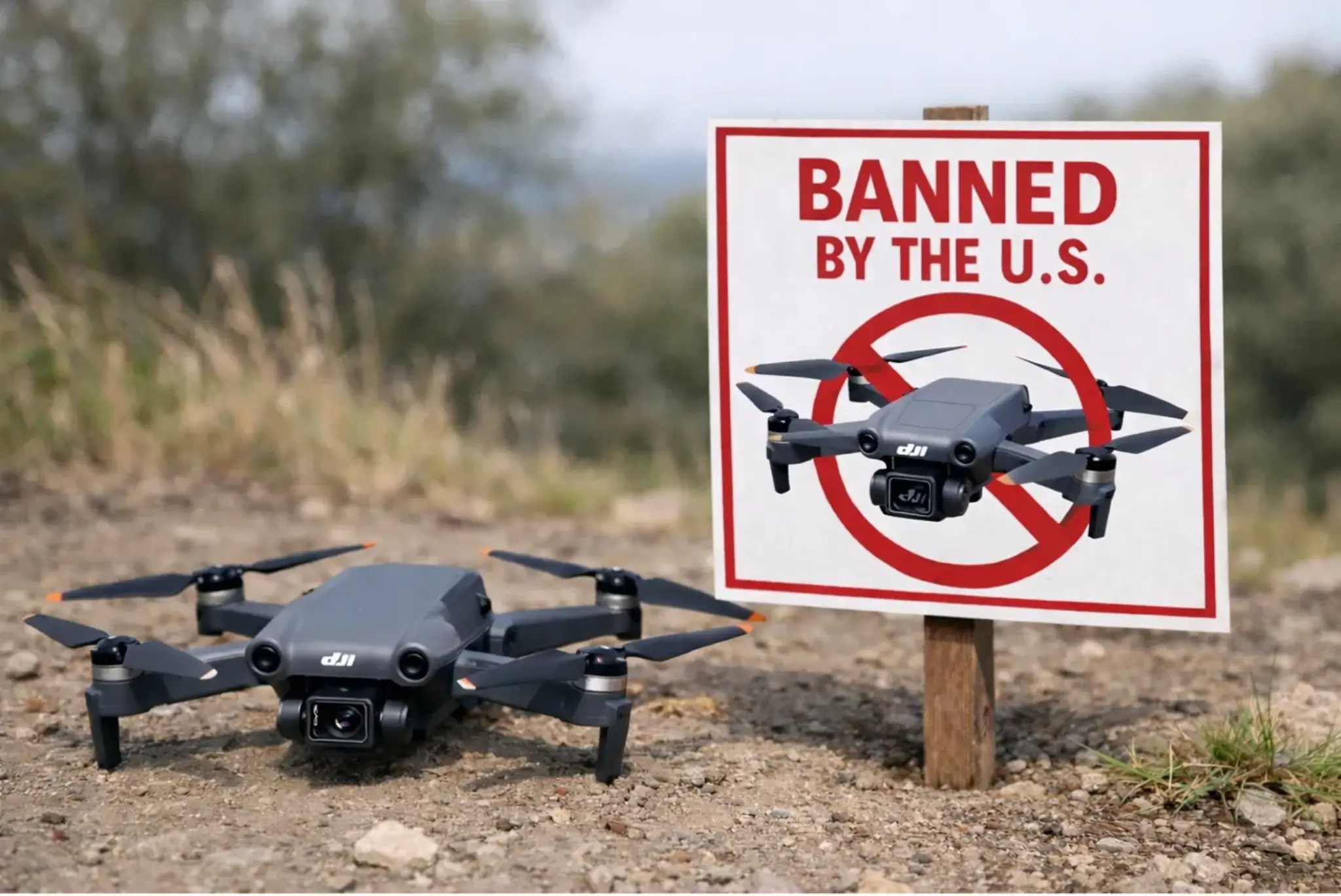
The DJI Replacement Crisis: Why Operators Need More Than Just New Hardware
96.7% of commercial operators fly DJI. The FCC covered list, NDAA restrictions, and Part 108 rules of origin are about to change that. But swapping one closed ecosystem for another won’t solve the real problem.
The Scale of the Problem
A SkyWatch survey of 8,056 commercial drone operators found that 96.7% currently use DJI equipment, with 70% operating fleets that are entirely DJI-based. These aren’t hobbyists. These are utility inspectors, surveyors, construction firms, agricultural operations, and public safety agencies that have invested tens or hundreds of thousands of dollars in DJI hardware, training, workflows, and data pipelines.
Now that investment is becoming a liability. Three regulatory actions are converging:
The FCC Covered List (December 2025): The FCC added DJI to its covered list, restricting authorization of new DJI equipment in the US market. Existing drones remain legal to fly, but the pipeline for new hardware is closing.
NDAA compliance mandates: An increasing number of government contracts, utility companies, and enterprise customers require NDAA-compliant equipment. DJI cannot meet this requirement. Operators who serve these customers must transition or lose contracts.
Part 108 rules of origin (§108.700): The proposed BVLOS framework requires aircraft to be manufactured in the US or in countries with bilateral airworthiness agreements. No such agreements exist for Chinese-manufactured UAS. DJI-equipped operators will be locked out of the BVLOS market entirely.
Each of these alone is manageable. Together, they represent a forced fleet replacement for the vast majority of the US commercial drone market.
The Trap: Replacing One Closed Ecosystem with Another
The natural instinct is to find a DJI replacement — another manufacturer whose drones can do what DJI’s did. And there are excellent options emerging. US-made platforms from companies like Freefly, Watts Innovations, Censys Technologies, Inspired Flight, and others are building hardware that rivals or exceeds DJI’s capabilities for commercial applications.
But here’s the lesson that DJI should have taught everyone: buying into a vertically integrated ecosystem means your operations, your data, your compliance records, and your training programs are all locked to a single vendor. When that vendor becomes restricted — whether by regulation, supply chain disruption, or business failure — everything breaks at once.
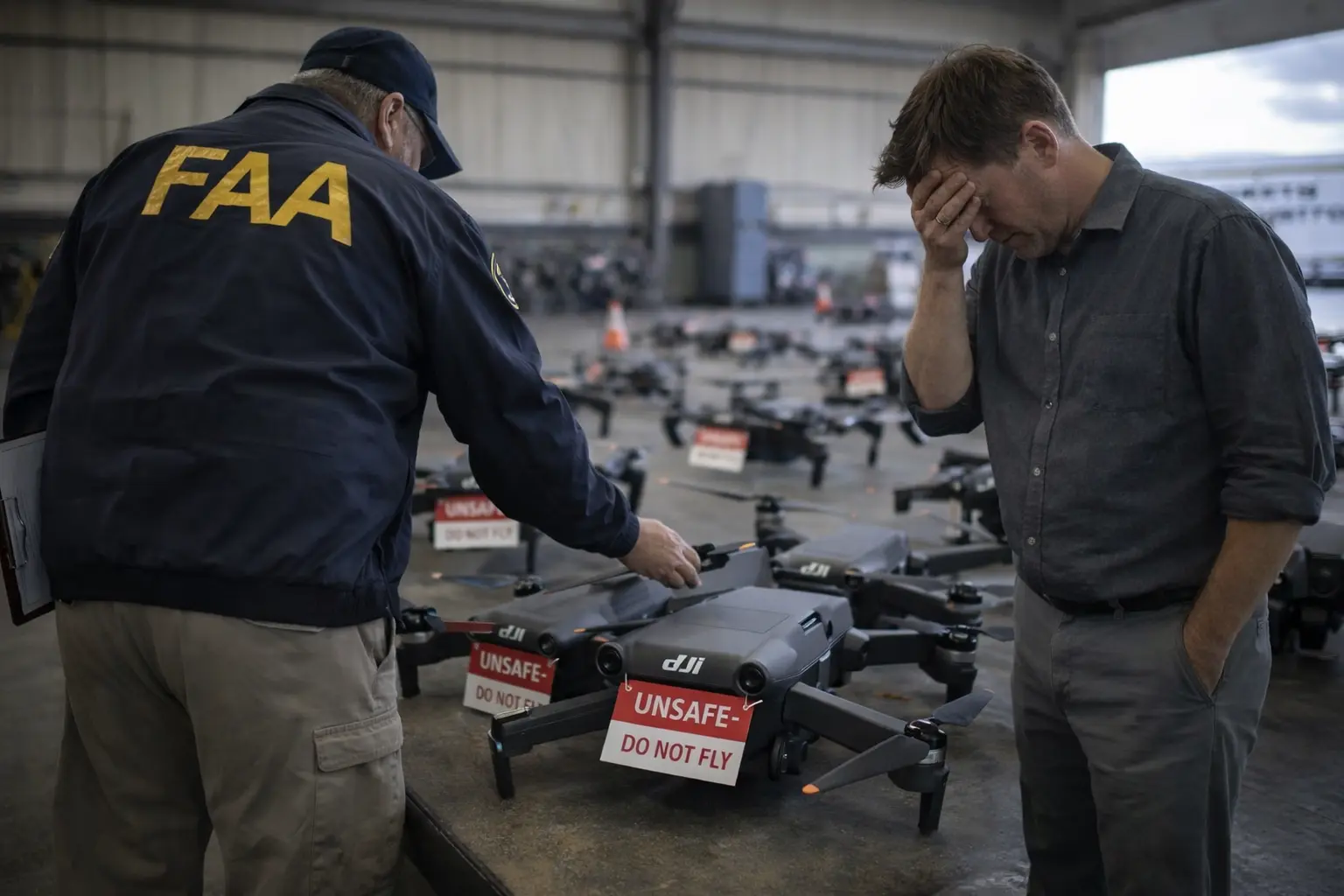
Operators didn’t just lose drones when DJI was restricted. They lost flight logging workflows. They lost mission planning tools. They lost the integration between DJI’s flight controller and their data processing pipeline. They lost the training programs built around DJI’s specific interfaces.
The question isn’t “which manufacturer replaces DJI?” The question is: how do I build an operation that doesn’t break when I change hardware vendors?
The Open Ecosystem Alternative
The answer is to separate the hardware layer from the operations layer. Choose the best aircraft for your mission — and it might be different aircraft for different missions — while running your compliance, training, maintenance, flight logging, and safety management on an independent platform that works across manufacturers.
This is how mature industries work. Airlines don’t use Boeing’s proprietary crew scheduling software and Airbus’s proprietary maintenance system. They use independent operations platforms that work with any aircraft type. The drone industry needs to make the same transition.
Under Part 107, the compliance burden was light enough that DJI’s closed ecosystem was tolerable. Under the proposed Part 108, the compliance requirements — safety management systems, organizational training programs, airworthiness documentation, ADSP integration, incident reporting — are too complex and too important to be locked to a hardware vendor that might not exist in its current form five years from now.
What This Means for Operators
If you’re planning your DJI replacement, think beyond the aircraft:
Choose hardware-agnostic operations infrastructure. Your compliance records, training programs, and flight logs should survive a hardware transition. If your operations platform only works with one manufacturer’s drones, you’re rebuilding the same single-vendor dependency you’re trying to escape.
Evaluate manufacturers on openness, not just specs. Does the manufacturer use open flight controller platforms (like Auterion or PX4)? Do they support standard data formats? Can their aircraft integrate with third-party operations software? Closed ecosystems offer convenience today at the cost of flexibility tomorrow.
Build for Part 108 now, even if you’re flying Part 107 today. The compliance infrastructure you invest in today should scale into Part 108 without rearchitecting. Training records, maintenance logs, and safety management systems that meet Part 108 requirements are also better Part 107 operations. You’re not over-building — you’re future-proofing.
What This Means for Manufacturers
The DJI ban creates a once-in-a-generation market opportunity for US drone manufacturers. Tens of thousands of commercial operators need new hardware. But the manufacturers who capture this market won’t be the ones who build the best closed ecosystem. They’ll be the ones who build the best aircraft and partner with the best operations infrastructure.
Operators who were burned by DJI’s lock-in are not looking for the next DJI. They’re looking for hardware that works with open, independent operations platforms — so they never have to rip out their entire operation because of a single vendor again.
The manufacturers who understand this will build aircraft. The smart ones will partner for everything else.
Virabelo builds coordination and compliance infrastructure for Part 108, whichever aircraft you build or fly. See what we’re building or contact us.